
Reconfiguring the Data Center: Why Optical Circuit Switching Matters Now
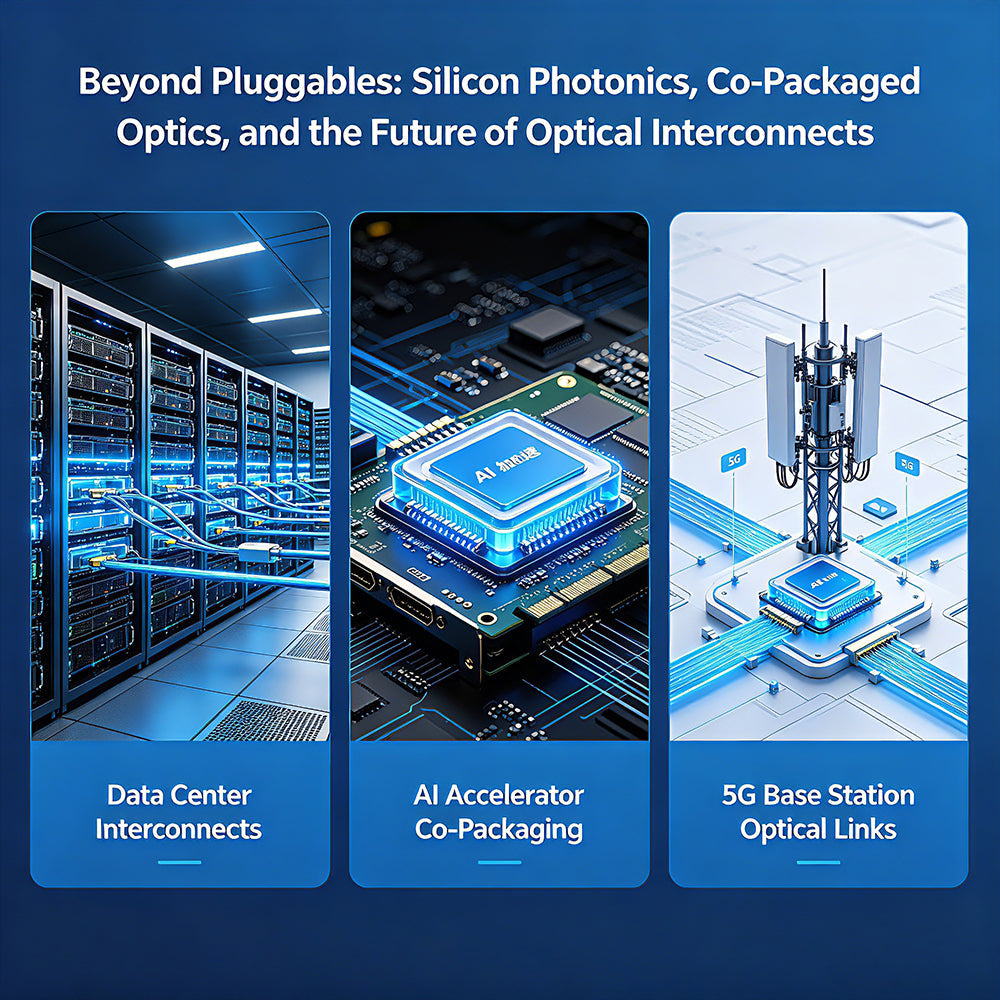
For decades, the architecture of data center networks has remained relatively static: a rigid spine-and-leaf hierarchy where every packet is subjected to multiple layers of electronic switching. But the era of AI is breaking this model. When you are training a multi-trillion parameter model over weeks, the traffic patterns are predictable and elephant-like. It is profoundly wasteful to route this traffic through power-hungry Ethernet switch hops in real-time. Enter Optical Circuit Switching (OCS)—a technology that allows operators to dynamically reconfigure the physical optical layer of the network, connecting compute pools directly via pure light paths without intermediate electrical conversion. For North America’s most ambitious AI builders, OCS is becoming the secret weapon for scale.
How OCS transforms economic models
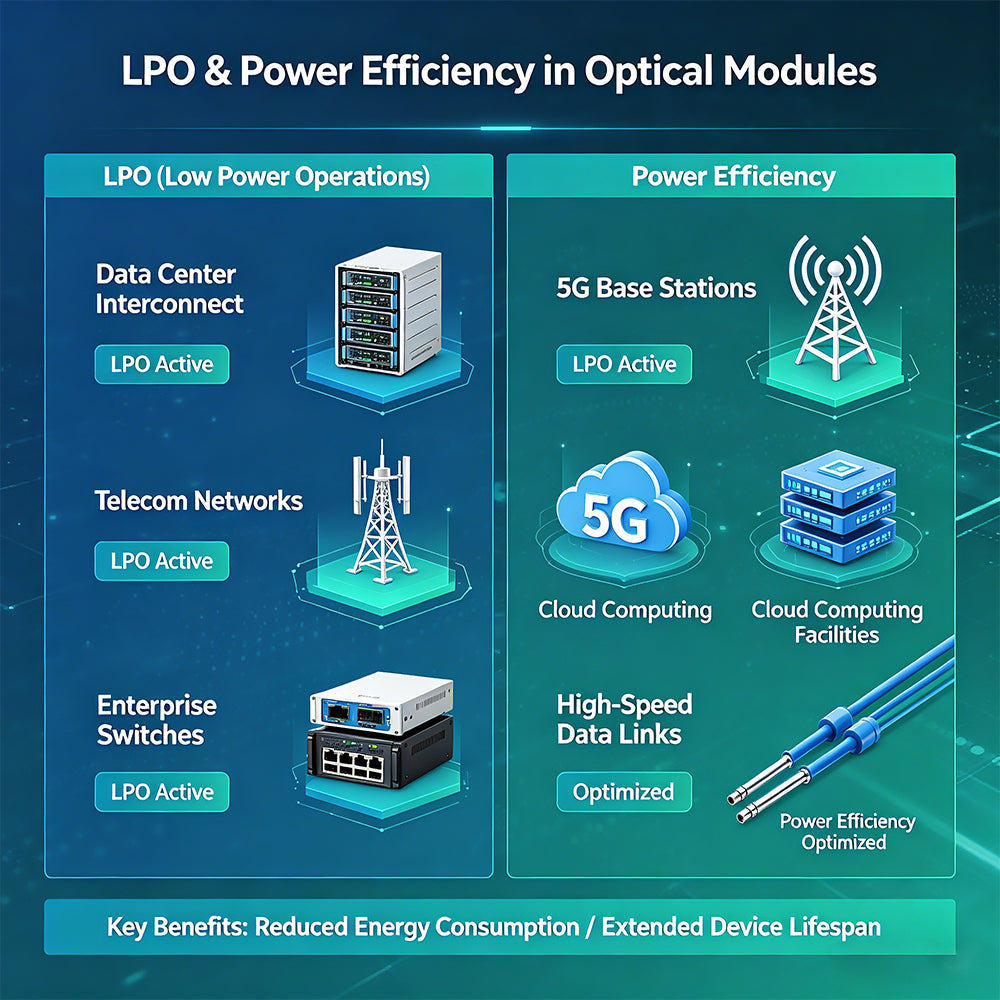
The cost structure of a modern data center interconnects is dominated by the switch chips and their associated optical ports. OCS changes the game by acting as a purely photonic cross-connect. It manipulates light beams directly using micro-electro-mechanical systems (MEMS) mirrors or liquid crystal technology, bypassing the need for continuous optical-electrical-optical conversion. This means aggregate network power can be drastically reduced—estimates suggest savings of 40% or more in certain tiers of the fabric architecture. For HaloWill’s customers, this architectural evolution opens up new conversations about total cost of ownership. Instead of simply buying a faster transceiver, operators are now buying into a smarter, flatter network.
The specific optical demands of an OCS world
Integrating OCS into a data center requires a different breed of optical transceivers. Because light paths can travel longer distances across the data center floor without regeneration, the requirements for coherent detection or high-power, high-fidelity PAM4 optics become more stringent. HaloWill’s advanced portfolio of 400G ZR/ZR+ and 800G coherent plugs directly addresses these intra- and inter-data center OCS use cases. Our optics are designed to maintain spectral stability and high launch power, ensuring they pass through the OCS fabric nodes with minimal insertion loss. This is not just about plugging in a module; it is about ensuring end-to-end optical budgets remain within spec in a dynamically changing topology.
HaloWill’s role in the open ecosystem
One of the hurdles to OCS deployment has been the fear of vendor lock-in. HaloWill aligns strongly with open, interoperable ecosystems. We actively collaborate with OCS hardware providers and switch silicon manufacturers to pre-validate our optics in hybrid environments. This allows North American cloud architects to mix and match compute, switch, and transport layers without worrying about optical compatibility. For procurement managers, the HaloWill value proposition here is risk reduction: you get the flexibility of a dynamically reconfigurable fiber plant backed by optics that perform consistently across multiple modes and distances.
Building for resilience and elasticity
Why is OCS critical today? Because AI training workloads are increasingly hyperscale; a single training job may consume an entire cluster for months. If a single switch fails in a traditional architecture, the training run is often killed and must be restarted. OCS, combined with resilient optical paths, allows for fast optical failover—rerouting light around a bad fiber or a downed switch port in milliseconds. HaloWill’s optics are engineered for this high-reliability context, featuring robust forward error correction and graceful degradation characteristics that keep training jobs alive and on schedule. As we help our North American customers navigate the leap to million-node scale clusters, HaloWill is delivering the optical reliability and architectural flexibility required to unlock the full potential of AI.