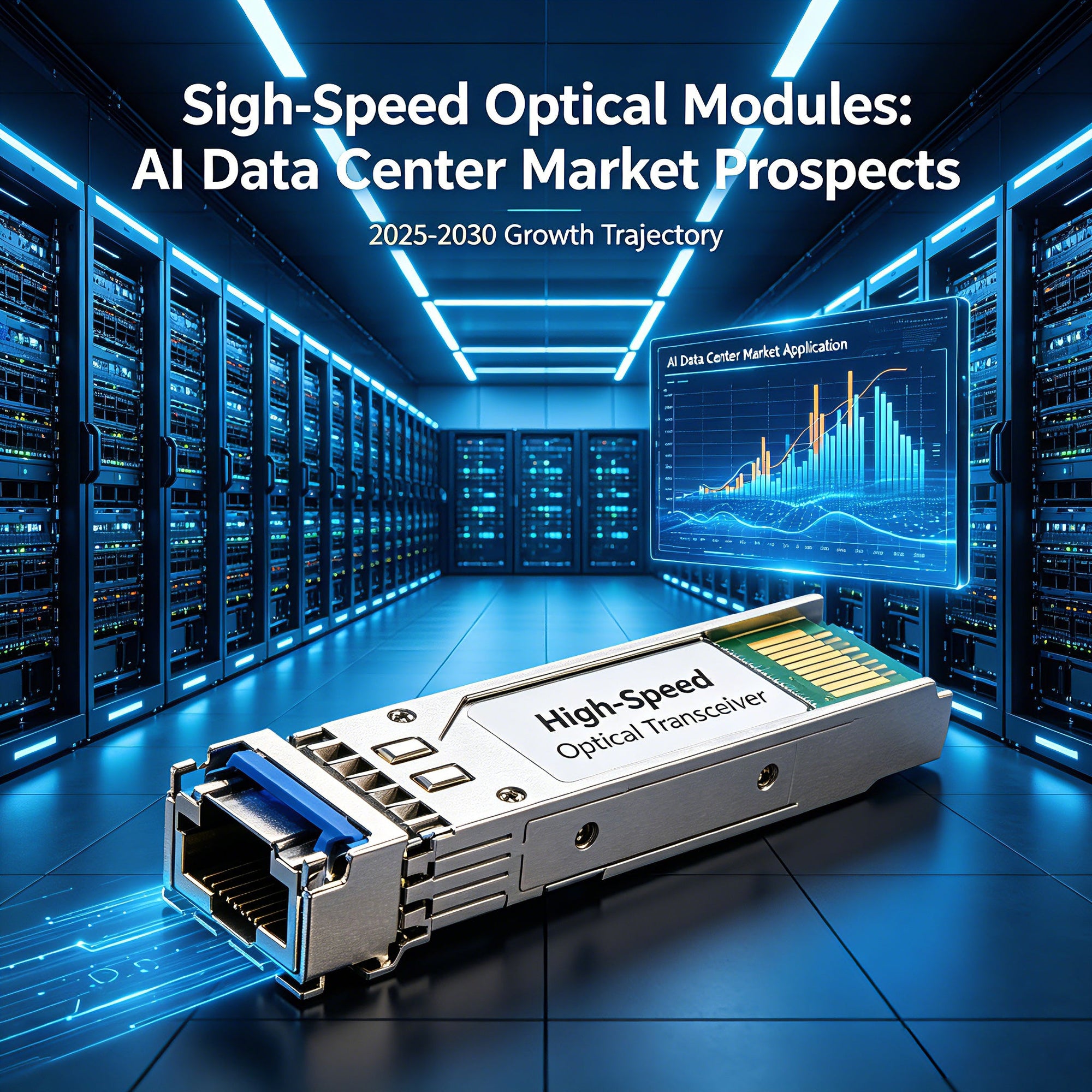

If you walk into the procurement department of any hyperscale data center in North America in 2025, you will notice a subtle shift taking place. In the past, the question procurement managers asked most often was, "What's your price?" Today, they are far more concerned with, "How much volume can you guarantee, and how fast can you deliver?" This shift from a price-driven mindset to a supply-security-driven mindset is reshaping the competitive landscape of the entire optical module industry.
Behind this shift lies a set of staggering numbers. According to the latest research from TrendForce, the global AI optical transceiver market is projected to leap from 16.5billionin2025to26 billion in 2026, a year-over-year increase of over 57%. Capital expenditures by the four largest North American cloud providers continue to soar, totaling $112.43 billion in the third quarter of 2025 alone, up 76.9% year-over-year. A significant portion of these funds ultimately translates into procurement orders for 800G and even 1.6T optical modules.
Yet the fervor on the demand side stands in stark contrast to the tightness on the supply side. Core optoelectronic chips, represented by EML lasers and CW-LDs, continue to face constrained capacity allocation, becoming the primary bottleneck restricting the industry's overall capacity expansion. Some leading buyers have already begun taking extreme measures — companies like NVIDIA are turning to long-term agreements to lock in the supply of critical components, ensuring that their AI computing deployment plans are not delayed due to optical module shortages. In other words, in this market, only companies that can secure production capacity are qualified to compete.
What does this mean for buyers and distributors in North America? The answer is clear: the old procurement model of quarterly price comparisons and switching suppliers at will is becoming unsustainable. In a tight supply-demand balance, a supplier's capacity assurance capabilities, the breadth of its multi-rate product coverage, and long-term partnership stability have replaced unit price as the primary considerations in procurement decisions.
This is exactly where the core value of the HaloWill brand lies in the North American market. Faced with the surging demand for 800G optical modules from data centers — with North American datacom demand for 800G modules reaching the 20-million-unit level in 2025 — HaloWill has established a full-rate product delivery system spanning from 400G to 800G and extending to 1.6T. This means that when a customer's data center upgrades from 400G to 800G, or evolves from 800G to 1.6T, there is no need to search for and evaluate new suppliers. HaloWill can provide a complete solution that covers the entire intergenerational upgrade cycle.
More importantly, HaloWill deeply understands the procurement culture of North American customers. In the North American market, the requirements for suppliers have never been limited to just "being able to supply"; they also include traceable quality control, responsiveness, and transparent business communication. HaloWill's investment in this area is systematic — from product to service, it has established a business response and technical support mechanism aligned with North American procurement culture. Procurement managers no longer need to worry about communication delays across time zones or struggle to decipher vague quotation terms.
From the perspective of technology evolution, there is an even deeper factor to consider when selecting a supplier — future compatibility. The optical module industry is going through a critical window of generational transition from 800G to 1.6T. LightCounting's latest forecast indicates that 800G optical module shipments will more than double in 2026, while 1.6T module shipments will leap from a small base to tens of millions of ports. This means that whether a supplier chosen today can provide seamless upgrade support for next-generation products tomorrow will directly impact the long-term trajectory of a data center's total cost of ownership. HaloWill's product roadmap was designed from the outset with this intergenerational continuity in mind, ensuring that every procurement decision a customer makes carries sufficient future flexibility.
For distributors, HaloWill offers not just products, but a market entry strategy. In the North American optical module distribution market, the greatest competitive advantages lie in supply stability and depth of technical support. When the entire industry faces chip shortages and tight capacity, brands that can deliver stable supply naturally possess a channel-attracting effect. By building a robust supply chain network and sufficient capacity reserves, HaloWill ensures that distributors can provide customers with reliable delivery commitments in any market environment.
In summary, as the AI computing race enters its second half, the reliability and sustainable supply capability of infrastructure are becoming the true deciding factors. Whether you are a data center operator, a system integrator, or a channel distributor, the choice of who you stand with will largely determine your competitive position in the years ahead. HaloWill is ready for this long-distance race — the next question is, are you?