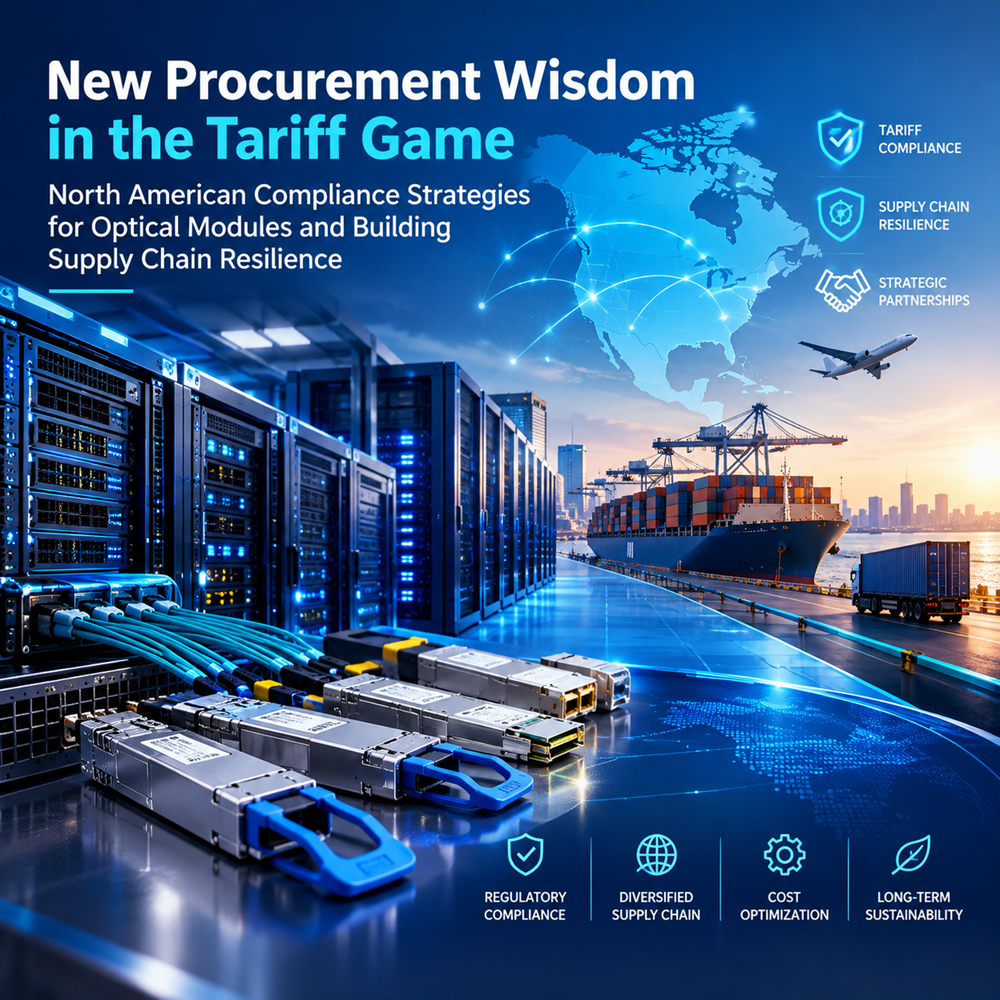

For North American optical module buyers, the tariff policy changes since 2025 are both a challenge and an opportunity. According to the “Specific Products Reciprocal Tariff Exemption Guide” issued by U.S. Customs and Border Protection (CBP), since April 2025, 20 commodity codes have been exempted from “reciprocal tariffs,” including servers, optical modules, and other products. Optical module products fall under category 8517, and tariff concerns in the overseas computing power industry chain have basically been eliminated.
However, the “U.S. content ≥20%” threshold set in the exemption clause deserves in-depth attention. This clause requires that at least 20% of the customs value of the product come from U.S. sources before tariff exemption can be applied for. This rule effectively creates a competitive advantage for suppliers with R&D, manufacturing, or procurement operations in North America.
In response to investor concerns, Zhongji Innolight confirmed that under the current new tariff policy, communications equipment, optical modules, and other products under the semiconductor classification are tariff-exempt. The company’s production and operations are normal, its order book is full, and it can ensure normal and orderly delivery to customers at home and abroad.
For buyers, the formulation of supply chain compliance strategies needs to go beyond tariff considerations for a single product. First, attention should be paid to suppliers’ global production capacity layout, prioritizing suppliers with production bases in regions that have preferential trade arrangements with the United States, such as Mexico and Southeast Asia. Second, procurement contracts should clearly specify origin clauses and tariff responsibility allocation mechanisms to avoid cost overruns caused by policy changes.
More importantly, building supply chain resilience requires a diversified layout. As TrendForce has observed, leading companies led by NVIDIA have begun introducing strategic long-term agreement mechanisms to lock in key material supply. For North American buyers, establishing long-term strategic partnerships with core suppliers, rather than frequently switching to low-priced suppliers, is of greater strategic value in the current environment of tight supply.