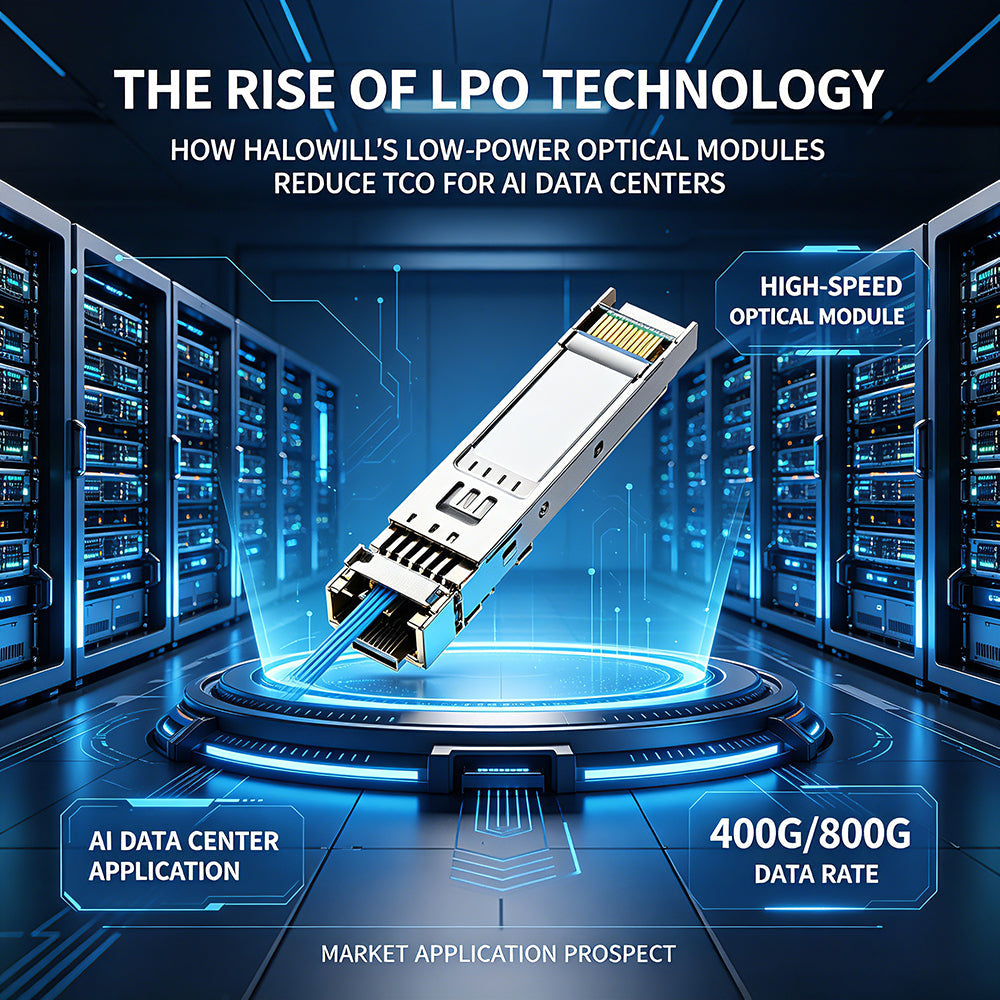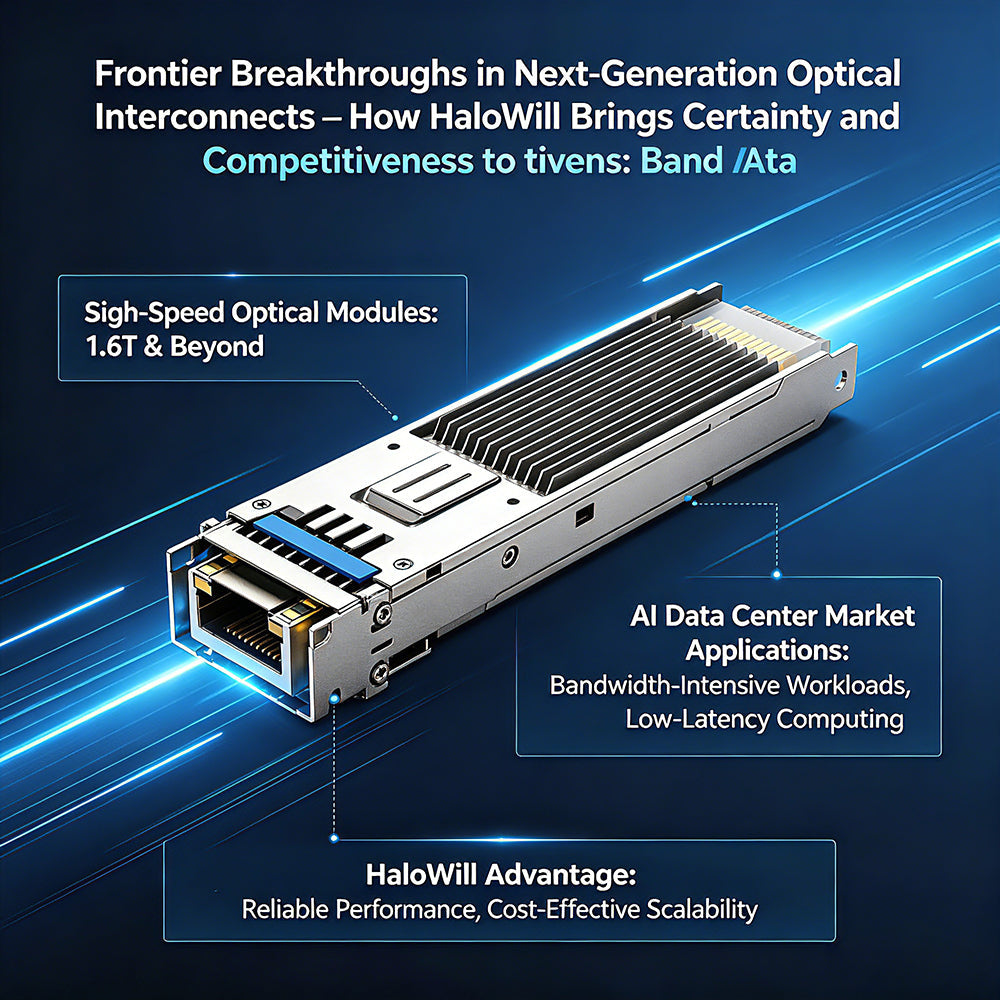

Artificial intelligence is rewriting every rule in the data center — including the fundamental logic of optical interconnects.
By 2026, the global market for AI-specific optical transceivers is projected to surge from 16.5billionin2025to26 billion, representing an annual growth rate exceeding 57%. Behind these figures are tens of thousands of GPU clusters training the next generation of large language models around the clock, data traffic in North American hyperscale data centers climbing at an annual rate of over 30%, and cloud giants such as Google, Microsoft, and Meta continually scaling up their AI server deployments.
However, what truly warrants deep reflection from every data center infrastructure planner is not the market numbers themselves, but the structural characteristics underlying this growth. Before the advent of generative AI, data center traffic was predominantly "north-south" — data exchange between clients and servers constituted the primary network load. Today, large-scale model training has brought massive "east-west" traffic: thousands of GPUs need to synchronize model parameters in real time, and the volume of server-to-server data exchange far exceeds that of externally served data. This means optical modules are no longer mere "connectors" in the network; they have become a critical link that directly determines AI training efficiency and the upper limit of cluster scale.
The 800G optical module has now become the mainstream specification for backbone interconnects in AI data centers, drawing a clear efficiency dividing line at the physical layer — a single 32-port 800G switch can deliver 25.6 Tbps of throughput, whereas the same rack space under a 400G architecture can only achieve 12.8 Tbps. For data centers where every square foot counts, this density advantage directly translates into dual savings in both CapEx and OpEx. Meanwhile, 1.6T products have accelerated into mass production, with shipments expected to exceed 5 million units in 2026, signaling that the next upgrade cycle has already begun ahead of schedule.
However, the breakneck pace of demand stands in stark contrast to capacity bottlenecks on the supply side. Core optoelectronic chips such as EML lasers and CW-LDs remain persistently tight due to capacity allocation constraints, while high-precision manufacturing processes like optical alignment also limit the ramp-up of large-scale production capacity. Upstream buyers like NVIDIA have already turned to long-term agreements (LTAs) to secure critical components. Yet for most data center operators and system integrators, the ability to find an optical module partner with a comprehensive product line, a stable supply system, and a clear technology roadmap has become a key variable affecting the pace of their infrastructure construction.
This is precisely the core value that HaloWill has been cultivating deeply in the North American market. Our product line fully covers the 400G to 1.6T speed range, is compatible with mainstream OSFP and QSFP-DD form factors, and offers complete transmission solutions ranging from short-reach SR to long-reach FR/LR. More importantly, HaloWill has established a diversified supply chain system and rigorous quality control processes. Even against the backdrop of tightening global supply of core optoelectronic chips, we can still provide North American customers with predictable delivery schedules. We fully understand that in the era of the AI computing arms race, every delivery delay means wasted computing resources and a loss of market competitiveness. Choosing HaloWill means choosing a long-term partner that truly understands the pain points of data center operators.